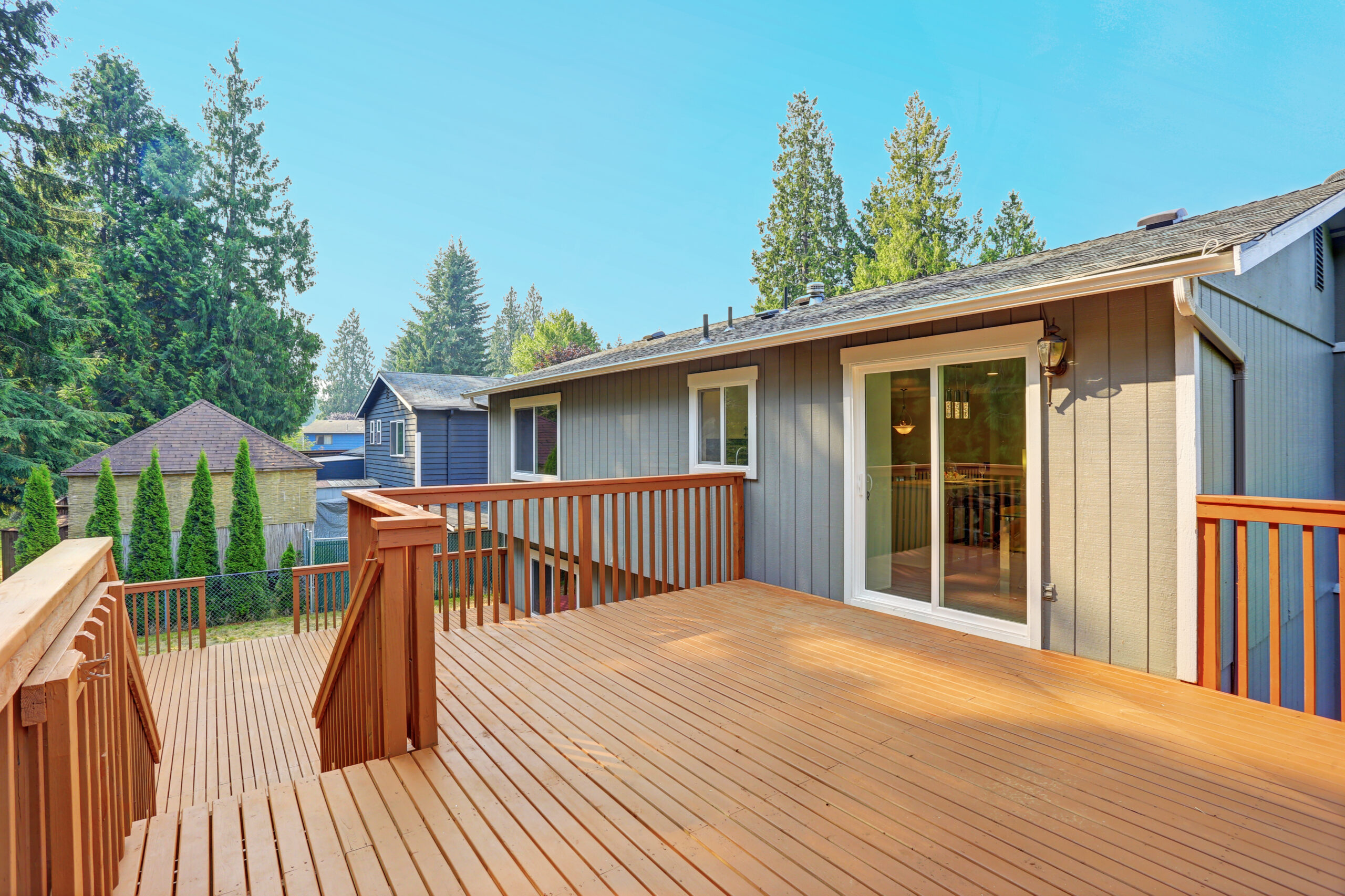
Whether you’re building a deck in Kalispell, setting posts for a pergola in Whitefish, or laying the foundation for a shed in Columbia Falls, getting your sonotube footings right is essential for a structure that will stand for decades. Here in Flathead County, our unique combination of soil conditions, frost depth requirements, and seasonal weather patterns means you need locally-informed guidance—not generic advice from the internet.
At Glacier Precast Concrete, we’ve helped homeowners and contractors across the Flathead Valley make smart decisions about concrete footings for over 30 years. This guide walks you through the key factors that determine the right sonotube diameter and depth for your project, with specific attention to what matters here in Northwest Montana.
Why Sonotube Size and Depth Matter
Sonotubes serve as the forms for your concrete pier footings—the critical connection between your structure and the ground. Two calculations determine your requirements:
- Diameter — Diameter (how wide the tube needs to be) determines how much weight the footing can distribute across the soil surface.
- Depth — Depth (how far it extends into the ground) protects against frost heave and ensures long-term stability.
Here’s the key insight that many people miss: the concrete in your footing is far stronger than the soil beneath it. The soil will always give out before properly mixed concrete fails. That’s why understanding your soil’s bearing capacity is the most important variable in footing design—your footing needs to be wide enough to distribute the structure’s weight across enough soil surface area to prevent settling.
Glacier Precast’s sonotubes are produced with 5,000 PSI concrete. At that strength, the concrete itself has an ultimate compressive capacity well beyond what any residential or light commercial structure will ever place on it. The soil is always the limiting factor.
Understanding Soil Bearing Capacity in Flathead County
Soil bearing capacity measures how much weight your soil can support per square foot before it begins to compress or fail. Different soil types have dramatically different capacities, and Flathead County’s diverse landscape means you might encounter very different conditions depending on whether you’re building near the valley floor in Kalispell, in the hills around Bigfork, or along the river near Columbia Falls.
Soil Bearing Capacity Reference Table
| Type of Soil | Load Bearing (Pounds Per Square Foot) |
| Rock w/ Gravel | 6,000 psf + |
| Gravel | 5,000 psf |
| Sandy Gravel | 5,000 psf |
| Sand | 3,000 psf |
| Silt Sand | 3,000 psf |
| Silt Gravel | 3,000 psf |
| Gravel w/ Clay | 3,000 psf |
| Clay | 2,000 psf |
| Sandy Clay | 2,000 psf |
| Silt Clay | 2,000 psf |
If you’re unsure what type of soil you have, a conservative estimate (using a lower bearing capacity) provides an extra margin of safety. Our Sonotube Load Calculator incorporates all of these soil types and helps you determine the right number of sonotubes for your project based on local conditions.
Soil Variability Across the Flathead Valley
Soil conditions can vary significantly even within the same property. Areas closer to Flathead Lake or the Flathead River may have different soil compositions than properties further from water. Glacial deposits have left a patchwork of soil types throughout the valley—you might hit gravel in one spot and clay just twenty feet away. This variability is one of the strongest reasons to ask questions before you start digging.
When in doubt, default to a lower bearing capacity in your calculations. A few extra sonotubes is a far better outcome than a settling structure.
Calculating Your Load Requirements
Before selecting a sonotube configuration, you need to understand how much total weight your footings will support. This involves calculating the “tributary area”—the portion of your structure that each post and footing is responsible for carrying.
Standard Load Assumptions
For residential decks and similar structures, the standard load calculation is 50 pounds per square foot (psf). This accounts for:
- 40 psf of live load (people, furniture, and temporary items)
- 10 psf of dead load (the weight of the structure itself)
However—and this is important for our area—Flathead County receives significant snowfall. If you’re building a covered structure such as a pergola with a solid roof, a carport, or a covered deck, you must account for snow loads. Local snow load requirements typically range from 50 to 70+ psf depending on elevation and exposure. For covered structures, plan on 90 to 100 psf total (combining floor and roof loads) to ensure your footings can handle a heavy snow year.
The Tributary Area Method
To calculate tributary area, divide your deck or structure into zones, with each post supporting the area closest to it. For a simple example: if you have posts spaced 8 feet apart on a deck that extends 10 feet from the house, a corner post might support 4 feet × 5 feet = 20 square feet, while a center post supports 8 feet × 5 feet = 40 square feet.
Multiply the tributary area by your load factor (50 psf for standard decks, higher for covered structures) to get the total load each footing must support. A center post with 40 square feet of tributary area on a standard deck would need to support 40 × 50 = 2,000 pounds.
Once you know your total structure weight and have identified your soil type, our Sonotube Load Calculator does the rest—calculating the minimum number of 16-inch sonotubes needed to achieve your target safety factor.
Understanding Safety Factors
A safety factor tells you how much margin exists between the load your sonotubes are carrying and the point at which the soil beneath them would fail. It’s the single most important number in footing design.
Safety Factor Reference
| Safety Target | What It Means | When to Use It |
| Minimum (1.0) | Load exactly meets soil capacity. No margin. | Not recommended for permanent structures. |
| Standard (1.5) | Reasonable buffer for soil variation and load shifts. | Acceptable for most applications. |
| Recommended (2.0) | Best practice. Accounts for settling, soil inconsistency, long-term loads. | All permanent structures. Glacier Precast standard. |
Our Sonotube Load Calculator shows you the tube count required for all three safety factor levels simultaneously, so you can make an informed decision based on your project’s permanence, budget, and risk tolerance. For any permanent structure, we recommend designing to the 2.0 standard.
| Why Glacier Precast Recommends a 2.0 Safety Factor Soil conditions in the Flathead Valley are variable. A safety factor of 2.0 accounts for localized soft spots, seasonal moisture changes, long-term load additions, and the general unpredictability of soil that only geotechnical testing can fully characterize. It costs a modest amount more in materials upfront and provides decades of peace of mind. |
Glacier Precast Sonotubes: One Size, Built Right
Glacier Precast produces sonotubes in a 16-inch diameter, manufactured with 5,000 PSI concrete mix. This specification was chosen because it hits the optimal balance of load capacity and practical usability for the residential and light commercial projects most common in the Flathead Valley.
A 16-inch sonotube provides 201 square inches of bearing surface area. At the Flathead Valley’s standard soil bearing capacity of 1,500 psf (10.4 psi), each tube can support the soil load of a substantial structure before the ground gives way. The concrete itself has an ultimate compressive strength orders of magnitude beyond what the soil can absorb—meaning our sonotubes are never the weak point in the system.
What a 16-Inch Tube Can Handle
- Small decks and pergolas (standard soil): 2–4 tubes typically sufficient
- Standard residential decks (12×16 feet): 4–8 tubes depending on soil and post spacing
- Large decks and covered structures with snow load: 8–16+ tubes depending on conditions
- Light commercial footings and agricultural structures: calculated per project
The right number of sonotubes for your specific project depends on your structure weight, soil type, and target safety factor. Use our calculator to get a precise recommendation.
Depth Requirements for Flathead County
While the number of sonotubes is determined by load and soil, depth is primarily governed by frost protection. In Flathead County, this is non-negotiable: footings must extend below the frost line to prevent frost heave, which occurs when water in the soil freezes and expands, lifting your foundation and causing structural damage.
Flathead County Frost Line Depth
For most of Flathead County, the standard frost line depth is 42 inches below grade. This applies whether you’re building in Kalispell, Whitefish, Columbia Falls, Bigfork, or elsewhere in the county. Your sonotube must extend at least to this depth to meet code requirements and protect your structure from frost damage.
Many experienced builders add an extra 6 inches (for a total of 48 inches below grade) to provide additional protection and ensure inspection approval. This small investment in depth provides significant peace of mind during our coldest winters.
Above-Grade Height
In addition to depth below ground, extend your sonotube 3 to 6 inches above ground level. This elevation prevents the bottom of wooden posts from wicking moisture from the soil, which accelerates rot. The concrete creates a moisture barrier between the ground and your wood structure.
For a 42-inch frost line with 4 inches above grade, you’ll need at least a 46-inch sonotube. Purchasing a 48-inch (4-foot) tube provides easier handling and accommodates slight variations in ground level across your work site.
Common Sizing Scenarios for Flathead County Projects
To put this all together, here are typical specifications for common residential projects in our area. These assume standard valley soil at 1,500 psf and a 2.0 safety factor unless noted.
Small Deck or Pergola (8×10 feet, 6-foot post spacing)
- Tributary area: 20–25 sq ft per post
- Total structure weight: 1,000–1,250 lbs
- Recommended tube count: 4–6 tubes (varies by soil)
- Depth: 42–48 inches below grade
Standard Residential Deck (12×16 feet, 8-foot post spacing)
- Tributary area: 40–60 sq ft per post
- Total structure weight: 2,000–3,000 lbs
- Recommended tube count: 6–10 tubes (varies by soil)
- Depth: 42–48 inches below grade
Large Deck or Covered Structure (16×20 feet with roof, snow load)
- Tributary area: 80–100 sq ft per post
- Total structure weight: 8,000–14,000 lbs (accounting for snow load)
- Recommended tube count: 14–22 tubes (varies significantly by soil)
- Depth: 42–48 inches below grade
Fence Posts, Mailboxes, or Light Structures
- Total load: 200–800 lbs
- Recommended tube count: 2–4 tubes
- Depth: Still requires 42 inches for frost protection
Use Our Flathead County Sonotube Load Calculator
We built a Sonotube Load Calculator specifically for Flathead County conditions. Enter your structure weight and soil type, and the calculator instantly shows you the minimum number of 16-inch sonotubes needed to achieve three safety factor levels—Minimum (1.0), Standard (1.5), and Recommended (2.0)—so you can make an informed decision before you ever pick up a shovel.
The calculator also displays the safety factor and PSI load per tube for each scenario, along with technical specifications for our sonotubes. It’s free to use and requires no signup.
Try the calculator at glacierprecast.com/sonotube-load-calculator.
Ask Questions Before You Start Digging
Undersized footings lead to settling, code violations, and potential structural failure. Oversized footings waste materials without proportional benefit. Taking time to get the sizing right before you dig ensures your project meets code, performs through Montana winters, and stands solid for decades.
Soil conditions vary throughout the Flathead Valley. What works for a neighbor’s project might not be right for yours. Local building departments also have specific requirements that may affect your project—always verify with your jurisdiction before breaking ground.
At Glacier Precast Concrete, our team is ready to help you make the right call. Contact us today—it’s always better to ask questions before you start digging.
About Glacier Precast Concrete
Glacier Precast Concrete serves homeowners and contractors throughout Flathead County and Northwest Montana. From sonotubes and concrete piers to precast steps, walls, and custom concrete products, we provide the materials and expertise to help your projects succeed. Visit us in Kalispell or give us a call to discuss your next project.